
Mitigation Plan vs Acceleration Plan in Project Planning: In-depth Analysis for Project Controls Professionals
Introduction :
Whether you are managing a €10M construction project or a €1Bn infrastructure programme, one reality remains: Delays are inevitable. The real differentiator is not avoiding them entirely, but knowing anticipate risks and Catching up effectively on setbacks when they arise.
This is where two essential project management strategies come into play: the mitigation plan and the acceleration plan.
Often confused or used interchangeably, these approaches nonetheless serve different objectives and are applied at distinct stages of the project lifecycle.
Let's look at that in detail.
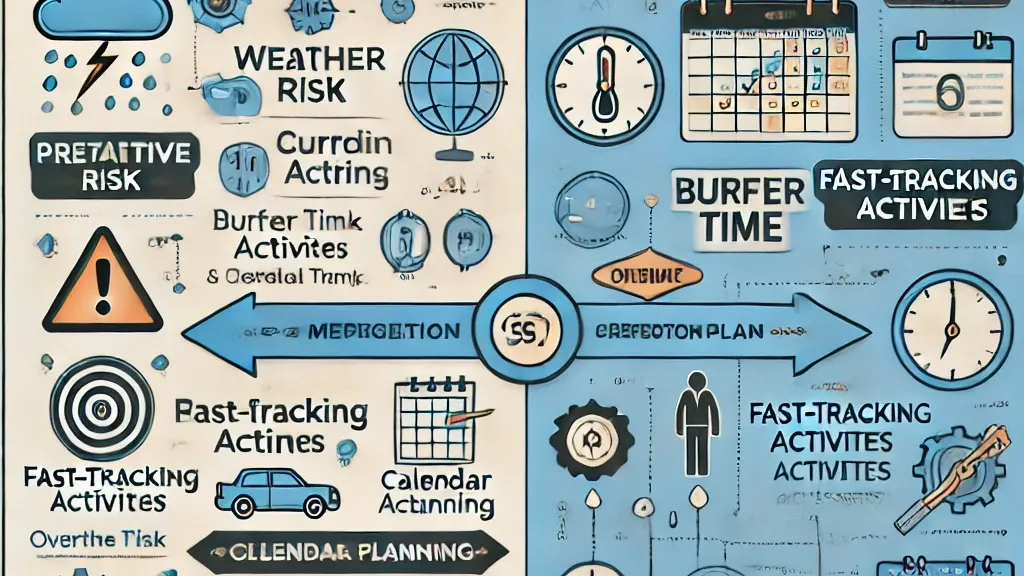
What is a mitigation plan?
One mitigation plan is a strategy proactive aiming to reduce the probability or impact of risks before they materialise.
Key features:
- Timing planning or start of execution phase
- Objective prevent or mitigate identified risks
- Focus Risk reduction / avoidance
- Approach based on probabilistic analysis, lessons learned, and weak signals
Concrete example
On a civil engineering project, a high risk of seasonal flooding can impact earthworks.
A mitigation plan could include:
- Reschedule critical activities during dry periods.
- Introduce floats or lags
- Provide backup equipment for a quick recovery
Modelling in Primavera P6:
- Use the risk management module
- Link risks to the activities concerned
- Define mitigation actions
- Simulate scenarios (e.g. Monte Carlo via external tools)
- Integrate contingency margins (float)
What is an acceleration plan?
One acceleration plan is a strategy reactive, implemented when the project is behind schedule or when the client requires an early delivery.
Key features:
- Timing after a delay or on customer request
- Objective to make up for lost time or compress the schedule
- Focus execution acceleration
- Impact often increased costs and pressure on resources
Concrete example
A mechanical installation package is 3 weeks behind schedule.
👉 Possible acceleration plan:
- Setting up double shifts or weekend work
- Reallocating resources to the critical path
- Fast-tracking (task overlap)
- Crashing (increasing resources to reduce durations)
Modelling in Primavera P6:
- Analyse du chemin critique après mise à jour
- Reduce durations or modify logic (FS → SS, FF…)
- Reprioritise resources
- Compare with the baseline to measure catch-up
- Evaluate the cost/resource impact
Why is this distinction essential
In high-stakes environments (EPC, energy, infrastructure, defence), confusing mitigation with acceleration can lead to:
- Misaligned stakeholder expectations
- Additional costs due to uncontrolled accelerations
- Poor visibility of risks
- Unforeseen contractual delays
✅ Best practices in Primavera P6
- Integrate risk from the outset Primavera Risk Analysis, Safran Risk
- Test the scenarios through copies or reflections
- Maintain a clean and static baseline
- Use filters and layouts to quickly identify deviations
- Document clearly Planning reports strategies
Conclusion
In modern project controls, performance relies on the ability to be Anticipatory and responsive both
- The mitigation plan reduces surprises
- The acceleration plan allows a return to the trajectory
The best professionals know when to use one, when to activate the other — and how to combine them intelligently.
And you? Have you already implemented mitigation or acceleration strategies? How has Primavera P6 helped you in your decisions?
 Français
  English (UK)
  Español
  Italiano
  Deutsch
  Nederlands